

Family Tax Benefit Calculator
Estimate your FTB Part A and Part B on the 2026-27 rates, before you nominate an income with Centrelink.
Built and checked byTimothy Hirou GaschereauFigures verified at the source on
Your details
Estimated Family Tax Benefit
$336 a fortnight
Part A, per fortnight
$273
Part B, per fortnight
$63
Over a full year, with supplements
$9,237
You are on track for $478 in supplements, paid as a lump sum after the end of the financial year rather than fortnightly. Part A's supplement is not in there, your income is over the $80,000 limit for it. Either way it only lands once Centrelink has balanced your payments against your actual income, which means lodging on time.
You miss the Part A supplement by $15,000
The supplement cuts out completely at $80,000 of family income. There is no taper, it is a cliff, so $1,942 disappears the moment you cross it. A deductible super contribution before 30 June can be worth more than it looks here.
Your income estimate is the single thing that decides whether you end the year with a top up or a debt. Check your Child Care Subsidy too, it runs off the same income figure.
Estimate only. It covers the Part A and Part B rates and their income tests, plus both supplements. It does not include Rent Assistance, Newborn Supplement, Multiple Birth Allowance, the Energy Supplement, shared care percentages, or the Maintenance Income Test that applies when child support is involved. Any of those can move your real payment. Confirm with Services Australia.
How to use this calculator
- 1. Single parent or couple. It changes which parts of FTB you can claim and which income test applies to Part B.
- 2. Enter each child's age. The rate differs for 0 to 12, 13 to 15, and 16 to 19 in approved secondary study, so ages do real work here.
- 3. Not your salary. Adjusted taxable income adds reportable fringe benefits, reportable super contributions, net investment losses, tax-free pensions and foreign income.
- 4. You get a fortnightly figure for Part A and Part B, plus the annual supplements. Confirm the final number with Services Australia through myGov.
Part A versus Part B, what is actually different
Most people assume Family Tax Benefit is one payment. It is not. Part A and Part B are two separate payments with different purposes, different rates and different income tests.
Part A is paid per child. The more children you have, the more you can receive. For 2026-27 the maximum fortnightly rates are $235.48 for a child aged 0 to 12, and $306.46 for a child aged 13 to 15 or aged 16 to 19 in approved secondary study. The base rate, the floor the payment sits on before it runs out entirely, is $75.60 per child per fortnight. Part A is open to single parents and couples alike, with no requirement for anyone to be out of the workforce.
Part B is paid per family, not per child, and it exists to support households where one parent earns little or nothing. It pays $200.34 a fortnight when your youngest is under 5, and $139.86 when your youngest is 5 to 18. Single parents under the income limit get the maximum automatically. Couples only qualify while the youngest child is under 13, the higher earner must be on $124,327 or less, and the lower earner can make $7,154 before the payment starts falling by 20 cents in the dollar.
The short version: Part A is about how many kids you have. Part B is about whether one of you is at home or working part time.
Your income estimate is the most important number you enter
Centrelink pays Family Tax Benefit through the year based on the income you estimate. At the end of the financial year, once your tax return is lodged, it balances your account and compares what you were paid against what you actually earned. Underestimate, and you were overpaid. That becomes a debt, and Centrelink will want it back.
This catches families out constantly. A pay rise in February, a bonus, a redundancy payout, an investment property that did better than expected, any of them can push your adjusted taxable income above the figure you nominated in July.
The Part A income test runs in three stages. At or below $69,131 you get the maximum rate. Between $69,131 and $123,078 the payment falls by 20 cents for every dollar over, down to the base rate and no further, which is why it plateaus in that band. Above $123,078 the base rate itself starts falling, by 30 cents in the dollar, until there is nothing left. Use your realistic estimate, not your optimistic one, and update it through myGov the moment your income changes.
The two supplements, and the $80,000 cliff
On top of the fortnightly payments there are two annual supplements, paid after the financial year ends and your income is confirmed. The Part A supplement is worth up to $970.90 per child for 2026-27. The Part B supplement is up to $478.15 per family. Neither is paid fortnightly. They arrive with your balancing payment, usually somewhere between July and November once both partners have lodged.
Here is the part that stings. The Part A supplement is only paid if your family adjusted taxable income is $80,000 or less. At $80,001 you lose it entirely. There is no taper, no partial payment, it is a cliff. For a family with two children that is up to $1,941.80 gone because the income crept over the line, which happens more often than you would think when someone picks up extra shifts in the second half of the year. If you are hovering near $80,000, a deductible super contribution before 30 June can be worth far more than the tax deduction alone.
What this calculator does not cover
This gives you a solid estimate of Part A and Part B. Several payments can sit on top of that figure, and they are not modelled here because they depend on circumstances the calculator does not ask about.
Rent Assistance is the big one. If you get Part A and you pay private rent, you may be eligible, and for many families it is not a small amount. Newborn Supplement is a higher rate of Part A for the first 13 weeks after a child joins your family, with the amount depending on whether you also get Parental Leave Pay. Multiple Birth Allowance is a separate fortnightly payment for triplets or more. Energy Supplement is a small top-up paid to some recipients depending on payment type.
The Maintenance Income Test matters most for separated parents. If the child support you receive exceeds the Maintenance Income Free Area, $2,080.50 a year for a single parent or a member of a couple receiving maintenance, your Part A reduces by 50 cents for every dollar over, down to the base rate. That runs on top of the standard income test and can move your payment substantially. If any of these apply, use the Services Australia Payment and Service Finder for the full picture.
FAQ
What is the maximum Family Tax Benefit I can get in 2026-27?
It depends on your children's ages and your income. A family with two children under 13 earning below $69,131 could receive up to $470.96 a fortnight in Part A alone, plus up to $200.34 in Part B if the youngest is under 5. Add the annual supplements and the yearly total can pass $14,000, before Rent Assistance or any other top-up.
Does my partner's income affect my Family Tax Benefit?
Yes, for both parts. Part A uses your combined adjusted taxable income. For Part B the higher earner's income decides eligibility, cutting out at $124,327, and the lower earner's income drives the rate once they pass $7,154 a year. Both incomes need to be declared accurately when you claim or update.
What counts as adjusted taxable income for FTB?
More than the taxable income on your return. It adds reportable fringe benefits at the grossed-up amount, reportable employer super contributions, net investment losses, tax-free government pensions and foreign income. If you salary sacrifice heavily or get fringe benefits through work, your adjusted taxable income can sit well above what your take-home pay suggests.
How do I avoid a Centrelink debt at the end of the year?
Keep your income estimate current and update it through myGov the moment your income rises. Centrelink reconciles your payments once you lodge your tax return, so any overpayment becomes a debt. You can also ask Centrelink to withhold part of your fortnightly payment as a buffer, which softens the end-of-year hit.
Can we claim Part B if we both work full time?
Possibly, but it will not be worth much. Part B falls by 20 cents for every dollar the lower earner makes above $7,154, so on two typical full-time wages the payment reaches nil long before the higher earner's $124,327 cut-off matters. The calculator shows the exact figure on your numbers.
When are the FTB supplements paid?
Not fortnightly. Both supplements arrive after the end of the financial year, once Centrelink has balanced your account against your confirmed income. That usually happens between July and November, after you and your partner have both lodged. Lodge late and the supplement can be delayed or withheld entirely.
Related reading

Parental Leave in Australia: Paid, Unpaid, and How It Stacks
Confused about parental leave in Australia? We break down government PPL, unpaid NES leave, super on PPL, and employer schemes in plain English.

Family Tax Benefit Explained (Part A, Part B and How to Claim)
Confused by Family Tax Benefit in Australia? Learn what FTB Part A and Part B are, who qualifies, and how to avoid a Centrelink debt.

JobSeeker Payment: Rates, Eligibility and How to Claim
How the JobSeeker Payment works in Australia: who is eligible, how much you get, how the income and assets tests reduce it, and how to claim via Centrelink.
Where these numbers come from
Every rate and threshold in this calculator was read off the official page, not copied from another calculator. Check them yourself, they change.
📚 Recommended reading
The Barefoot Investor for Families
Scott Pape

The Barefoot Investor for Families
Scott Pape takes his mega-selling Barefoot system and points it at raising money-smart kids, with age-by-age jobs, pocket money and jam-jar tricks. If you want your kids to grow up good with money, this is the Aussie classic.
She's on the Money
Victoria Devine
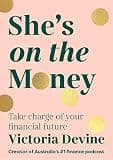
She's on the Money
Written for millennials, walks through budgeting, clearing debt, saving, investing and buying property with real stories.
Some links above are affiliate links. If you buy through them, Snowball Invest may earn a small commission at no extra cost to you. We only recommend books we'd suggest anyway.
SnowLetter
Australia's money news and our best reads, once a week.
Disclaimer
These estimates use the 2026-27 Family Tax Benefit rates published by Services Australia and are a guide only. They are not financial advice and they do not account for every factor Centrelink weighs when assessing your entitlement, including shared care, Rent Assistance and the Maintenance Income Test. Your final payment is determined by Services Australia on your confirmed adjusted taxable income. Confirm through myGov or on 136 150.