
Age Pension Calculator
See your estimated fortnightly Age Pension, which of the two means tests is deciding it, and how far you are from the cut-off.
Built and checked byTimothy Hirou GaschereauFigures verified at the source on
Your details
Estimated Age Pension
$954.90a fortnight
A year
$24,827
Assessable assets
$415,000
Share of the full rate
80%
The two tests, and which one is costing you
Assets test
Applied$954.90
a fortnight under this test
Income test
$1,080.22
a fortnight under this test
Services Australia runs both and pays whichever gives the lower amount. Yours is currently decided by the assets test, so that is the lever that matters for you.
You are $82,000 over the assets free area
The free area is $333,000 and the pension disappears entirely at $733,500, which is $318,500 above where you sit now. Past the free area, every extra $1,000 of assets costs you $78 of pension a year. That is a 7.8% effective rate of return you have to beat before an extra dollar of savings leaves you better off.
Your money is deemed to earn $12,152 a year
The income test ignores what your savings actually earn. The first $66,800 is deemed to earn 1.25% and anything above it 3.25%, whether you are getting that or not. Leaving cash in a low-rate account does not reduce your deemed income, it just means you actually earn less than Centrelink says you do.
Based on the March to September 2026 rates, including the pension and energy supplements. Assumes you are over Age Pension age and meet the residency rules. Real assessments also consider gifting in the last five years, income streams bought before 2015, and special disability trusts.
How to use this calculator
- 1. Couples are assessed together, and the home you live in is exempt from the assets test. Non-homeowners get a much higher free area to compensate.
- 2. Super counts once you are over pension age, along with savings, shares, a second car, a caravan and any investment property. Value your contents at what you'd get at a garage sale, not what you paid.
- 3. Wages, rent or a defined benefit pension. Leave it at zero if your only income comes from the assets above, since the calculator deems those automatically.
- 4. That's the one deciding your payment, and the only one worth acting on. If it's the assets test, spending or gifting changes your pension. If it's the income test, the deeming rules are what matter.
Who can get the Age Pension, and when
Age Pension age is 67 for everyone born on or after 1 January 1957, so for anyone planning today it is simply 67. You also need to be an Australian resident and to have lived here for at least 10 years in total, with at least 5 of those years unbroken. Meet those two and you are through the door, at which point the means tests decide how much you actually get.
Worth knowing: qualifying for even a tiny part pension usually gets you the Pensioner Concession Card, which is worth real money in cheaper medicines, utilities and rates. A great many Australians who assume they earn too much turn out to qualify for a few dollars a fortnight plus the card. Our guide to the Age Pension covers the claim process end to end.
How the assets test works, and why your home does not count
Centrelink adds up your assessable assets and compares the total to a free area. The family home is exempt no matter what it is worth, which is the single biggest quirk in the system. Below the free area you get the full rate. Above it, every $1,000 of assets reduces your pension by $3 a fortnight until it hits zero at the cut-off.
| Situation | Full pension up to | Nothing above |
|---|---|---|
| Single, homeowner | $333,000 | $733,500 |
| Single, non-homeowner | $600,000 | $1,000,500 |
| Couple, homeowner (combined) | $499,000 | $1,102,500 |
| Couple, non-homeowner (combined) | $766,000 | $1,369,500 |
Couples are assessed on their combined assets, and it makes no difference whose name anything is in. The one exception worth knowing: if your partner is under Age Pension age, their super in accumulation phase does not count as an asset, which is why some couples deliberately hold more in the younger partner's fund.
The income test, and the deeming rules that drive it
The income free area is $226 a fortnight for a single and $396 combined for a couple. Above that, a single loses 50c of pension per dollar of income, and a couple loses 25c each, which is the same 50c across the household. On the current maximum rate that means a single stops getting anything at $2,627.80 of income a fortnight.
Here is the part that catches people. Centrelink does not look at what your money actually earns. It deems it. The first $66,800 of financial assets for a single, or $110,600 for a couple, is deemed to earn 1.25% a year, and everything above that 3.25%, regardless of reality. Park your savings in an account paying 0.1% and Centrelink still counts the deemed figure, so you have lost twice. If you are still working, the Work Bonus lets you earn $300 a fortnight of employment income before the income test sees it, and unused amounts bank up to $11,800 for later.
Why Centrelink pays whichever test gives less
Both tests run, both produce a number, and you get the lower one. Take a single homeowner with $600,000 of assessable assets and $300 a fortnight of other income. The assets test knocks off $801 a fortnight, which is 267 lots of $1,000 over the free area at $3 each, leaving $399.90. The income test knocks off only $37, leaving $1,163.90. Centrelink pays $399.90, because the assets test is the harsher of the two.
This is why knowing which test binds you is more useful than knowing your payment. If the assets test is doing the damage, spending money on a holiday or a home renovation genuinely lifts your pension, because the family home is exempt. If the income test binds instead, moving money around does very little, since deeming applies wherever the money sits. The calculator marks the applied test so you are not guessing.
What the taper actually costs you
That $3 a fortnight per $1,000 works out to $78 a year, which is a 7.8% effective loss on every dollar of assets above the free area. Sit in that zone and an extra $10,000 of savings costs you $780 of pension a year. Your investments have to return more than 7.8% after tax just to leave you level, which almost nothing does reliably.
That is why the advice to spend down or restructure gets thrown around so much in this range. Just be careful with gifting: you can give away $10,000 in a financial year and no more than $30,000 over five years. Anything beyond that is treated as a deprived asset and keeps counting against you for five years, so handing the kids $100,000 to qualify does not work. It simply makes you poorer with the same pension.
What counts as an asset, and what does not
Counted: bank accounts, term deposits, shares, managed funds, super once you are over pension age, investment property at market value, businesses, cars, caravans, boats, and household contents at second-hand value. That last one trips people up, because Centrelink wants the garage sale price, not the insurance figure. Most people overstate their contents by thousands and quietly cost themselves pension.
Not counted: the home you live in and up to two hectares around it, a prepaid funeral or funeral bond up to the allowable limit, an accommodation bond paid to an aged care home, a superannuation balance belonging to a partner who is under Age Pension age, and assets held in a special disability trust. Our guide to the assets test goes through the edge cases properly.
FAQ
What is the Age Pension age in Australia?
It's 67 for everyone born on or after 1 January 1957, which covers everyone reaching retirement now and from here on. You also need to have been an Australian resident for at least 10 years, with at least 5 of those years continuous.
How much is the Age Pension right now?
The maximum is $1,200.90 a fortnight for a single and $1,810.40 combined for a couple, including the pension and energy supplements. Rates are indexed on 20 March and 20 September each year, so they rise regularly and this page is updated as they do.
How much can I have in assets and still get a full pension?
$333,000 as a single homeowner, $600,000 as a single non-homeowner, $499,000 for a homeowner couple combined, and $766,000 for a non-homeowner couple. Above those, the pension falls by $3 a fortnight per $1,000 until it runs out.
At what point do I lose the Age Pension entirely?
On the assets test, $733,500 for a single homeowner, $1,000,500 for a single non-homeowner, $1,102,500 for a homeowner couple and $1,369,500 for a non-homeowner couple. On the income test, $2,627.80 a fortnight for a single and $4,016.80 combined for a couple.
Does my house count towards the assets test?
No. The home you live in is exempt no matter what it is worth, along with up to two hectares of land around it. That's why a homeowner gets a much lower assets free area than a non-homeowner, the system is trying to even things up.
What are the deeming rates and why do they matter?
Financial assets are deemed to earn 1.25% a year up to $66,800 for a single or $110,600 for a couple, and 3.25% above that, no matter what they actually earn. It means chasing a lower interest rate doesn't reduce your assessed income, and earning more than the deemed rate is effectively free of the income test.
Does my super count for the Age Pension?
Once you're over Age Pension age, yes, your super counts as an assessable asset whether you've touched it or not, and it's deemed for the income test too. If your partner is under Age Pension age, their super in accumulation phase is not counted, which is a genuine planning lever for couples with an age gap.
Can I give money away to get a bigger pension?
Only a little. You can gift $10,000 in a financial year and no more than $30,000 across five years. Anything over those limits is treated as if you still own it for five years, so a large gift makes you poorer without lifting your payment.
Can I work and still get the Age Pension?
Yes. The Work Bonus exempts the first $300 a fortnight of employment income from the income test, and any unused amount banks up to a maximum of $11,800 for fortnights when you earn more. Plenty of pensioners work part time without losing a cent.
Why does the calculator show two different amounts?
Because Centrelink runs two tests and pays the lower result. Seeing both tells you which one is actually costing you money, and therefore what to do about it. If the assets test is applied, reducing assets helps. If the income test is applied, it's your income and deemed income that matter.
How is this different from your retirement income calculator?
This one works out the pension itself, running the means tests in detail. The retirement income calculator answers a bigger question, what your total income in retirement looks like once you combine your own savings with an estimated pension. Use this one to understand the entitlement, that one to plan the whole picture.
Is it worth applying if I'll only get a few dollars?
Usually yes. Any part pension, however small, comes with the Pensioner Concession Card, which cuts the cost of prescriptions, and often utilities, rates, registration and public transport. For a lot of people the card is worth more than the payment itself.
Related reading

Age Pension Australia: Rates, Eligibility, and How It All Works
How much the Age Pension pays, who's eligible, how the income and assets tests actually work, how it interacts with your super, and when to apply.
Where these numbers come from
Every rate and threshold in this calculator was read off the official page, not copied from another calculator. Check them yourself, they change.
📚 Recommended reading
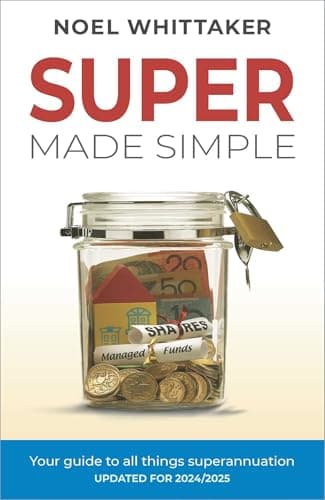
Super Made Simple
Noel Whittaker
Super Made Simple
A focused, up-to-date guide to actually understanding your superannuation, from one of Australia's most trusted finance writers.
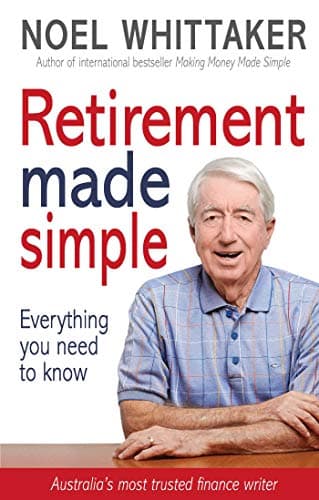
Retirement Made Simple
Noel Whittaker
Retirement Made Simple
Australia's godfather of personal finance demystifies super, the pension and making your savings last. The plain-English retirement handbook every Aussie should read before they stop working.
Some links above are affiliate links. If you buy through them, Snowball Invest may earn a small commission at no extra cost to you. We only recommend books we'd suggest anyway.
SnowLetter
Australia's money news and our best reads, once a week.
Disclaimer
This calculator uses Age Pension rates for the 20 March to 19 September 2026 period, including the pension and energy supplements, along with assets test thresholds effective from 1 July 2026, an income free area of $226 a fortnight for singles and $396 for couples, the $3 per fortnight per $1,000 assets taper, and deeming rates of 1.25% and 3.25% above thresholds of $66,800 and $110,600. Rates are indexed on 20 March and 20 September, so figures change twice a year. It assumes you are over Age Pension age and meet the residency requirements, and it does not model gifting in the last five years, the Work Bonus, income streams purchased before 2015, defined benefit pensions, special disability trusts, rent assistance, or transitional rates. This tool provides estimates only and is not financial or legal advice. Confirm your own situation at servicesaustralia.gov.au or with a Services Australia Financial Information Service officer, which is free.