

The Tax-Free Threshold Explained ($18,200)
Australia's tax-free threshold is $18,200. Who can claim it, how to claim it from the right employer, what happens with a second job, and how to fix mistakes.
 By Timothy Hirou GaschereauPublished
 7 min read
Try it yourself
The tax-free threshold is one of the most useful things in the Australian tax system, and one of the most misunderstood. In plain English: the first $18,200 you earn in a financial year is completely free of income tax. Not taxed at a low rate. Free. This is part of our guide to Australian income tax.
🎯 The essential: The tax-free threshold for 2024-25 is $18,200. You claim it by ticking “Yes” on your Tax File Number declaration with your main employer, and only from one employer at a time. If you work only part of the year, you still get the full $18,200: it's not pro-rated.
What is the tax-free threshold?
The tax-free threshold means the first $18,200 of your annual income is not subject to income tax. You only start paying income tax on every dollar above that. You may have heard of the Low and Middle Income Tax Offset (LMITO); that ended after 2022-23. The Low Income Tax Offset (LITO) still applies in 2024-25, worth up to $700 for incomes up to $37,500. Together, the statutory threshold and LITO mean most Australian residents pay zero income tax on their first $18,200. The bottom line: you only pay income tax on earnings above $18,200.
How much is that in real money?
$18,200 a year breaks down like this:
- $350 a week
- $700 a fortnight
- $1,517 a month (approximately)
That's the amount you can earn before the ATO takes a cent in income tax. Say you earn $55,000 a year. You don't pay tax on all of that: you pay income tax only on $55,000 minus $18,200 = $36,800. That $36,800 is your taxable income, and the $18,200 sits underneath it, untouched. See how the bands stack up in our guide to tax brackets.
The golden rule: only claim it from one employer
This is where people trip up. You can only claim the tax-free threshold from one employer at a time, specifically your main or highest-paying job. When you start a new job, your employer gives you a TFN declaration (or you complete it online through myGov). One question asks whether you want to claim the tax-free threshold. Tick “Yes” for your main job. Tick “No” for every other job.
What happens if you accidentally claim it from two employers? Both withhold less tax, because each thinks you haven't used your threshold yet. At tax time the ATO adds up your total income, sees you've underpaid all year, and the result is a tax bill. It's not a trick, it's just how the system works. Two employers, one threshold.
What happens if you have a second job?
Your second job is taxed at your marginal rate from dollar one, with no tax-free threshold applied. This sounds harsh but isn't, really. The key thing to understand: you don't pay more total tax just because you have a second job. You pay the same amount either way. The difference is timing.
| Scenario | Threshold claimed? | What your employer withholds |
|---|---|---|
| Main job | Yes | Tax withheld only on earnings above $18,200 |
| Second job | No | Tax withheld at your marginal rate from dollar one |
| Claiming from BOTH (mistake) | Yes (incorrectly) | Too little tax withheld, a tax bill at year end |
If you want to avoid surprises, you can ask your second employer to withhold a little extra tax each pay. It's voluntary, and you'd just get any over-withholding back as a refund.
Should you claim the tax-free threshold?
Almost always, yes. Here's the simple guide:
- One job: claim it, always.
- Multiple jobs: claim it from your highest-paying job only.
- Total income under $18,200 (e.g. a student working casually): still claim it. You may get a full refund at tax time because your employer withheld tax you didn't owe.
- Non-resident for tax purposes: you are not entitled to the threshold. Non-residents are taxed at a flat rate from the first dollar.
Part-year tax-free threshold: starting or stopping mid-year
Good news if you only worked part of the financial year: you still get the full $18,200 threshold. It is not pro-rated based on how many months you worked. This applies whether you started a new job partway through the year (including arriving in Australia), returned from parental leave or a career break, or stopped working before 30 June. Because your employer withholds as if you'll earn at that rate all year, you'll often find you've overpaid, so lodging your return typically means a refund.
What if you don't claim the tax-free threshold?
If you forget to claim the threshold, your employer withholds more tax than needed from every pay. You're not in trouble, you're just giving the ATO an interest-free loan. When you lodge your return, the ATO refunds the difference. Two practical options: update your TFN declaration mid-year (ask for a new form, tick “Yes,” and withholding drops from your next pay), or do nothing and collect the refund at tax time.
It's not a disaster either way, just mildly annoying. The threshold isn't lost: any over-withheld tax comes back when you lodge your return.
The bottom line: claim the tax-free threshold from your main job, not from a second one, and you'll pay the right amount of tax through the year with no surprises. Work only part of the year and the full $18,200 still applies, usually landing you a refund.
SnowLetter
Australia's money news and our best reads, once a week.
❓ Frequently asked questions
Do I have to claim the tax-free threshold?
+
No, it's not compulsory. But if you don't claim it from your main job, your employer will withhold more tax than necessary and you'll get a refund at tax time. There's no good reason to skip it on your primary job.
What if I forgot to claim the tax-free threshold with my employer?
+
Ask your employer for a new TFN declaration form and tick "Yes" to claim the threshold. Your withholding will adjust from your next pay. Alternatively, just lodge your tax return at year end and collect the refund. Either way, you won't lose the money.
Can I claim the tax-free threshold if I'm a student?
+
Yes. If your total income for the year is under $18,200, you may pay zero income tax and get back everything your employer withheld. Make sure you lodge a tax return to claim that refund.
Does the tax-free threshold apply to superannuation?
+
No. Super contributions are taxed separately at the concessional rate of 15% inside your super fund. The tax-free threshold applies to your personal income tax only, not to super.
What if I'm a non-resident for tax purposes?
+
Non-residents are not entitled to the tax-free threshold. Different tax rates apply, starting at 30% from the first dollar of income for 2024-25. If you're unsure of your residency status, check the ATO's residency tool.
I have two jobs. Will I get a tax bill if I claim the threshold from both?
+
Almost certainly, yes. Both employers will withhold less tax than they should, and the ATO will catch the shortfall when you lodge your return. In some cases the ATO may also charge interest on the underpayment. Claim the threshold from one job only.
📚 Recommended reading
The Barefoot Investor
Scott Pape

The Barefoot Investor
Australia's best-selling money book ever. A simple system for accounts, budgeting, debt and a real emergency fund in one.
Making Money Made Simple
Noel Whittaker

Making Money Made Simple
Australia's classic, comprehensive money guide covering tax, super and investing, updated for today.
On Your Own Two Feet
Helen Baker
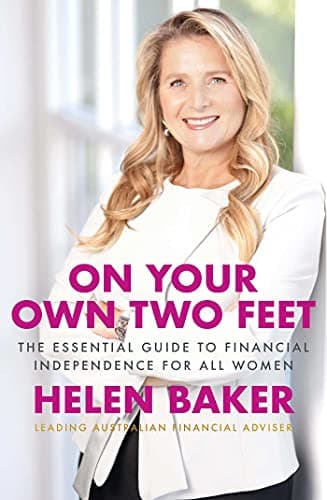
On Your Own Two Feet
An Aussie financial planner's essential guide to money independence for women, covering every life stage from single to separated. Warm, practical and genuinely on your side.
Some links above are affiliate links. If you buy through them, Snowball Invest may earn a small commission at no extra cost to you. We only recommend books we'd suggest anyway.
Sources
This article is general information only and does not constitute financial or tax advice. Thresholds and rules change over time, so check the latest ATO guidance and speak to a registered tax agent about your own situation.
Was this article useful?
Put it to your own numbers
Every calculator runs entirely in your browser, with nothing stored. See what these numbers look like for your own situation.
Try the Income Tax calculator →General information only. This article is educational and does not constitute personal financial advice. It does not account for your circumstances. Consider your own situation and seek advice from a licensed adviser before acting. Read our full disclaimer.

Timothy Hirou Gaschereau
Founder of Snowball Invest, not a financial adviser.
I write about what I'm learning myself, because nobody ever taught us how to take control of our own money. It's a skill, not a mystery, and it's never too late to learn it. The best day to start was yesterday, the second best is today.
LinkedIn →Related articles

Second Job Tax in Australia: What You Actually Pay
Worried about second job tax in Australia? Learn how it really works, bust the taxed-more myth, and avoid a nasty tax-time surprise.

RSU Tax in Australia: When You Actually Pay, and How Much
Your RSUs are about to vest. When the tax hits, what gets assessed, why there may be no withholding at all, and the CGT clock most people get wrong.
The ESS Taxing Point: Upfront or Deferred, and Why It Decides Everything
Your ESS tax bill hangs on one date. How to tell which regime your plan uses, what triggers the deferred taxing point, and what changed on 1 July 2022.