

Salary Sacrificing Childcare in Australia: How It Works
Can you salary sacrifice childcare in Australia? For most people it saves nothing thanks to FBT. Here is who it works for, and what actually cuts the bill.
 By Timothy Hirou GaschereauPublished
 10 min read
Try it yourself
Childcare fees are brutal, so it makes total sense to ask: if you can pay them from pre-tax dollars, why wouldn't you? The honest answer is that for most Australian employees, you can't, at least not in a way that actually saves money. A tax called Fringe Benefits Tax largely shuts the door.
But "most" is not "all". There are real situations where salary sacrificing childcare genuinely works, and one far bigger lever that helps nearly everyone. Here is the straight version.
🎯 The essential: For most private-sector employees using an external childcare centre, salary sacrificing childcare fees saves nothing: the employer's FBT bill cancels out your income tax saving. It does work if your employer runs an on-site childcare centre (FBT-exempt), or if you work for an FBT-exempt employer like a public hospital or registered charity, within your packaging cap. For almost everyone else, the Child Care Subsidy is the real lever, and watch that packaging can lift your assessed income and trim your subsidy. This is general information, not personal tax advice.
Why it usually does not work
Salary sacrifice only saves you money when the benefit is FBT-exempt or FBT-rebatable. Childcare fees paid to an external centre are generally neither. Fringe Benefits Tax runs at 47% on the grossed-up value of a benefit. When your employer pays your childcare fees under a sacrifice arrangement, the ATO treats that as a fringe benefit and your employer becomes liable for the FBT.
In practice employers do not absorb that cost. They pass it back to you, so your income tax saving gets wiped out by the FBT. For most private-sector employees at an external centre, the net result is no meaningful tax saving, added complexity, and possibly a smaller Child Care Subsidy. The ATO's guidance on FBT and childcare confirms employer-provided childcare is generally taxable, with a narrow exemption only for on-premises care.
When salary sacrifice CAN work
There are three situations where the numbers land in your favour:
- On-site workplace childcare (FBT-exempt). Under section 47(2) of the FBTAA 1986, childcare on your employer's own business premises is exempt from FBT, so the sacrifice genuinely cuts your taxable income. The catch: it is rare, limited to large employers (some hospitals, universities, and major corporates) that run their own centre. A nearby centre with a corporate discount does not count.
- FBT-exempt employers. Staff of public and not-for-profit hospitals, public ambulance services, and registered charities (PBIs) can package childcare within their cap: roughly $9,010 of actual value a year for hospitals and ambulance services, and about $15,900 for PBIs and health promotion charities. Confirm the figures with your packaging provider.
- FBT-rebatable employers. Some other not-for-profits get a rebate on FBT rather than a full exemption, so the benefit is partial, reduced but not eliminated.
Which situation are you in?
| Your situation | FBT applies? | Does it save tax? |
|---|---|---|
| Private sector, external centre | Yes | No, no net benefit for most |
| Private sector, employer's on-site centre | No, exempt | Yes (rare) |
| Public hospital / ambulance service | No, within cap | Yes, up to ~$9,010 value |
| Registered charity / PBI | No, within cap | Yes, up to ~$15,900 value |
| FBT-rebatable not-for-profit | Partial rebate | Partial benefit only |
| Self-employed / sole trader | Not applicable | No employer to run it |
A worked example: the nurse vs the marketing manager
Two people, same $95,000 salary, very different outcomes when they each package $9,010 of childcare.
Priya packages $9,010 within her FBT-exempt cap. With no FBT, the whole amount comes from pre-tax salary, and at her 32% marginal rate that saves about $2,883 a year. The arrangement works. Marcus asks his private employer to sacrifice the same $9,010 to an external centre. The employer faces FBT of roughly 47% x $9,010 x 1.8868, about $7,995, and passes it back. Marcus saves about $3,108 in income tax but wears about $7,995 in FBT, leaving him around $4,887 worse off. These are illustrative figures only; your outcome depends on your rate and your employer's arrangements.
What actually saves families money: the Child Care Subsidy
For the vast majority of families, the Child Care Subsidy (CCS) is the primary and most effective way to cut childcare costs. It is paid directly to your provider, reducing your out-of-pocket fees automatically, and the rate depends on your family income.
| Family income | CCS rate |
|---|---|
| $0 to $88,520 | 90% |
| $88,520 up to below $538,520 | 90% down to 0%, falling 1% per $5,000 |
| $538,520 or more | 0% |
The subsidy applies to your hourly fee or the relevant hourly rate cap, whichever is lower (the centre-based day care cap is $14.63 an hour for children below school age in 2025-26). Families with more than one child aged 5 or under may get a higher rate on younger children. Our Child Care Subsidy guide and the real cost of childcare walk through the numbers.
The CCS catch salary packagers miss
Here is the trap that catches nurses, social workers, and others in the not-for-profit sector who do package. Reportable fringe benefits amounts are included in your adjusted taxable income, which is used to assess your CCS (and Family Tax Benefit). Adjusted taxable income is a broader measure than your taxable income.
Packaging can lift your assessed income and quietly reduce your subsidy. For a non-exempt employer the reportable amount counts in full; for an FBT-exempt employer it is multiplied by 0.53 first. Either way, model the combined effect on your CCS and Family Tax Benefit before you increase packaging, because the lost subsidy can offset the tax saving.
See our Family Tax Benefit guide for how adjusted taxable income flows through family payments.
What to do instead: a practical checklist
- Claim your Child Care Subsidy through myGov and Services Australia if you have not already. This is the single biggest lever for most families.
- Check your activity test hours, since your subsidised hours depend on the recognised work, study or volunteering you and your partner do each fortnight.
- If you work for a hospital, ambulance service or charity, ask your packaging provider whether childcare fits inside your cap.
- If your employer runs an on-site centre, ask HR whether the fees can be sacrificed under the FBT exemption.
- Do not assume any arrangement saves money without written confirmation and, ideally, advice from a registered tax agent.
- Consider other sacrifice options that genuinely reduce tax without the FBT drama, such as extra super contributions.
Frequently asked questions
Can I salary sacrifice childcare fees in Australia?
+
It depends on your employer. For most private-sector employees using an external childcare centre, salary sacrificing childcare fees does not save tax, because the employer faces Fringe Benefits Tax that offsets your income tax saving. It can work if your employer runs an on-site childcare centre (FBT-exempt) or if you work for an FBT-exempt employer such as a public hospital or registered charity.
Is childcare FBT-exempt?
+
Only in specific cases. Childcare provided by an employer on the employer's own business premises is FBT-exempt under section 47(2) of the FBTAA 1986. Childcare fees paid to an external centre are generally not FBT-exempt for private-sector employers.
I work for a hospital. Can I salary package my childcare fees?
+
Possibly yes. Employees of public hospitals and public ambulance services can salary package a range of benefits, including childcare, within their FBT-exempt cap (around $9,010 of actual value a year for hospitals and ambulance services). Check the exact rules with your employer's salary packaging provider.
Does salary sacrificing childcare affect my Child Care Subsidy?
+
It can. Reportable fringe benefits amounts are included in your adjusted taxable income, which is used to assess your CCS. Increasing your packaging can raise your assessed income and reduce your subsidy, so always model the combined effect before making changes.
What is the main way most families reduce childcare costs?
+
The Child Care Subsidy (CCS), administered by Services Australia. It subsidises between 0% and 90% of your fees depending on family income, paid directly to your provider. For most families this saves far more than any salary sacrifice arrangement.
My employer has a discount deal with a nearby centre. Does that count as FBT-exempt?
+
Generally no. The FBT exemption for in-house childcare requires the facility to be on the employer's own business premises. A nearby external centre, even with a corporate discount, does not qualify for the on-premises exemption.
What should I do if I am not sure whether it will help me?
+
Speak with a registered tax agent or your employer's salary packaging provider, and ask them to model the after-tax and after-CCS outcome for your specific situation before you change anything.
Keep reading
Books worth reading
📚 Recommended reading
The Barefoot Investor
Scott Pape

The Barefoot Investor
Australia's best-selling money book ever. A simple system for accounts, budgeting, debt and a real emergency fund in one.
Making Money Made Simple
Noel Whittaker

Making Money Made Simple
Australia's classic, comprehensive money guide covering tax, super and investing, updated for today.
On Your Own Two Feet
Helen Baker
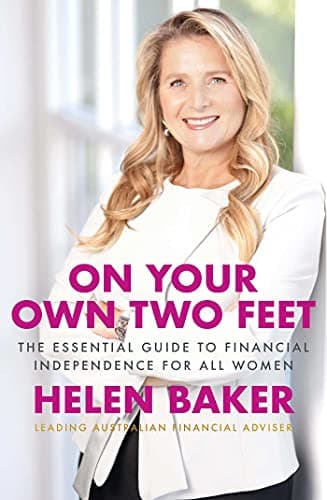
On Your Own Two Feet
An Aussie financial planner's essential guide to money independence for women, covering every life stage from single to separated. Warm, practical and genuinely on your side.
Some links above are affiliate links. If you buy through them, Snowball Invest may earn a small commission at no extra cost to you. We only recommend books we'd suggest anyway.
Sources
- ATO, FBT on childcare
- ATO, reportable fringe benefits
- Services Australia, Child Care Subsidy
- Services Australia, how much Child Care Subsidy you can get
General information only, not personal financial or tax advice. Rules around FBT, salary packaging and the Child Care Subsidy are complex and change regularly. Check current ATO and Services Australia guidance and consider a registered tax agent for your situation.
Was this article useful?
Put it to your own numbers
Every calculator runs entirely in your browser, with nothing stored. See what these numbers look like for your own situation.
Try the Child Care Subsidy calculator →General information only. This article is educational and does not constitute personal financial advice. It does not account for your circumstances. Consider your own situation and seek advice from a licensed adviser before acting. Read our full disclaimer.

Timothy Hirou Gaschereau
Founder of Snowball Invest, not a financial adviser.
I write about what I'm learning myself, because nobody ever taught us how to take control of our own money. It's a skill, not a mystery, and it's never too late to learn it. The best day to start was yesterday, the second best is today.
LinkedIn →Related articles

Reportable Superannuation Contributions Explained
Seen 'reportable super contributions' on your tax return? Here is what they are, what they are not, and why they affect Family Tax Benefit, CCS and HECS.

Concessional vs Non-Concessional Super: The Plain-English Guide
Concessional or non-concessional super contributions? The real difference, the 2025-26 caps, the tax treatment, and which one suits you, in plain English.

Novated Lease vs Car Loan vs Paying Cash: Which One Actually Wins?
Novated lease, car loan or paying cash? A plain-English guide to the tax savings, the catches, and exactly who each option suits when financing a car in Australia.