

Public Liability vs Professional Indemnity Insurance: Which Does Your Business Need?
Public liability vs professional indemnity insurance Australia explained in plain English. Find out which cover your small business actually needs - or if you need both.
 By Timothy Hirou GaschereauPublished
 11 min read
This article is general information only, not personal or business financial advice. Insurance requirements vary by profession, contract and state, always confirm your specific obligations with a licensed insurance broker or adviser. This is part of a wider guide to insurance on Snowball Invest.
Quick answer
Public liability insurance covers physical harm, someone is injured or their property is damaged because of your business. Professional indemnity insurance covers financial harm, a client loses money because of your advice, service, or a professional mistake. One does not cover the other, and many businesses genuinely need both. Whether you're legally required to hold either cover depends on your profession, your contracts, and your state or territory, not a blanket national rule.
In this guide
- →What public liability insurance covers, and real-world examples
- →What professional indemnity insurance covers, and real-world examples
- →The core difference between the two, explained in plain English
- →Which one your business actually needs, with a quick self-test
- →Whether either is a legal requirement in Australia
- →How much cover businesses typically hold, and what it costs
🧱 What is public liability insurance?
Public liability insurance covers you if someone dies, gets injured, or has property damaged because of your negligence, that's the definition business.gov.au uses. It's the cover that kicks in when something goes physically wrong and your business is responsible. It can cover bodily injury or death, emotional distress or a recognised psychiatric illness, property damage, and consequential loss where your negligence causes another business to lose expected revenue.
Real-world examples:
- A customer slips and falls on a wet floor in your shop
- A plumber accidentally cracks a pipe at a client's home, flooding the kitchen
- A market stall holder's display stand topples and damages a neighbouring vendor's stock
In all three cases the harm is physical. It does not cover financial loss caused by your advice or professional services, that's a different type of cover entirely.
📋 What is professional indemnity insurance?
Professional indemnity insurance covers you when a client suffers a financial loss because of your professional advice, services, or a mistake in your work. As business.gov.au puts it, professional indemnity insurance helps cover the cost of legal action from claims against your professional advice or services.
It covers mistakes, neglect, or breaches of contract resulting in a client loss, including wrong financial or legal advice, not achieving contracted results, incorrect auditing of accounts, and medical malpractice.
Real-world examples:
- An accountant lodges a client's tax return with an error, triggering an ATO audit and penalty
- A marketing consultant recommends a campaign strategy that flops, and the client claims $80,000 in lost sales
- An IT contractor builds a system that fails on launch, costing a week of downtime
The harm here is financial and reputational, not physical.
🔍 The core difference in plain English
Public liability means "someone got physically hurt or their stuff got damaged because of my business." Professional indemnity means "someone lost money because of my advice, service, or professional mistake." One covers physical harm, the other financial harm, and one does not cover the other.
🎯 The essential: Example: a graphic designer's client trips over a laptop bag during a meeting, that's public liability. The same client later claims a logo was plagiarised and they lost business, that's professional indemnity. Two different incidents, two different policies.
📊 Quick comparison table
| Feature | Public liability | Professional indemnity |
|---|---|---|
| What triggers a claim | Physical injury or property damage to a third party | Financial loss suffered by a client due to your advice or services |
| Type of harm covered | Bodily injury, death, property damage | Economic loss, reputational damage, legal costs |
| Typical claim scenario | Customer slips in your shop; tradesperson damages client's property | Accountant gives wrong tax advice; consultant's report leads to a bad business decision |
| Who typically needs it | Tradespeople, retailers, hospitality, anyone with a physical premises or on-site work | Consultants, accountants, lawyers, IT contractors, architects, marketers, advice-based professionals |
| Covers financial loss from advice? | No | Yes |
| Covers physical injury/property damage? | Yes | No |
✅ Which one does your business need?
You probably need public liability if you:
- Work at client premises or job sites (tradespeople, cleaners, photographers)
- Have customers visiting your shop, studio, or home office
- Run events, markets, or pop-ups
- Sell or supply physical products
- Work in hospitality, retail, or another customer-facing industry
You probably need professional indemnity if you:
- Give professional advice for a fee (consultant, accountant, lawyer, financial adviser, engineer)
- Provide services where a mistake could cost your client money
- Work as an IT contractor, architect, marketer, or designer
- Are a registered health practitioner
- Are a freelancer whose deliverables directly affect a client's business outcomes
Many businesses need both:
- An architect visits building sites (public liability risk) and provides design advice (professional indemnity risk)
- A personal trainer works at a gym with clients (public liability) and writes customised nutrition plans (professional indemnity)
- A bookkeeper handles client finances (professional indemnity) and sometimes meets clients at their offices (public liability)
Quick self-test. One, do you interact with the public, have clients visit your premises, or work at client sites? Probably need public liability. Two, do you give advice, provide a professional service, or could a client claim your work caused them financial loss? Probably need professional indemnity. Yes to both means you probably need both.
⚖️ Is it a legal requirement in Australia?
For most small businesses, neither cover is legally mandated federally, unlike CTP insurance or workers' compensation (which is required if you have employees). Public liability is required by law for certain occupations in some states and territories, check your state's rules if you're in a licensed trade.
Professional indemnity is mandatory for some professions. Registered tax agents and BAS agents must hold professional indemnity insurance meeting Tax Practitioners Board (TPB) requirements as a condition of registration, with minimum cover ranging from $250,000 (turnover up to $75,000) to $1,000,000 (turnover over $500,000). Registered health practitioners (doctors, nurses, physiotherapists, psychologists and others regulated by the national scheme) must have professional indemnity arrangements complying with their board's registration standard set by Ahpra, applying to all aspects of their practice.
Even if not legally required, it's often contractually required. Commercial leases frequently require tenants to hold public liability insurance. Head contractor agreements in construction almost always specify a minimum cover level. Government contracts routinely require both. Professional associations may require professional indemnity as a condition of membership. Check your lease, contracts, and any professional body requirements before assuming you don't need cover.
💵 How much cover do you need?
There's no universal answer. For public liability, the most common contractual requirement is $10 million, seen in commercial leases, government contracts, and head contractor agreements across Australia. Some smaller contracts and associations may accept $5 million.
For professional indemnity, the amount is driven by profession, revenue, and what clients or licensing bodies require. The TPB sets tiered minimums for tax agents based on turnover, and Ahpra requirements vary by health profession. General principle: check contracts first, then professional association requirements, then talk to a licensed insurance broker.
💰 What does it typically cost?
Cost varies enormously by industry, revenue, claims history, cover amount, and insurer, treat any figure here as rough orientation, not a quote. Public liability for a sole trader or small low-risk business can start from a few hundred dollars a year, trades and higher-risk industries pay more. Professional indemnity follows a similar pattern, a low-risk profession with modest revenue might pay a few hundred dollars annually, while a higher-risk profession with larger revenue pays considerably more.
Ways to manage costs:
- Check your professional association, it may offer industry-specific insurance at a group rate
- Consider a bundled business insurance package
- Work with a licensed insurance broker (verify their licence on ASIC's professional register) who can compare options
🧩 Other business insurance worth knowing about
If your business relies heavily on one or two key people, including yourself, it's worth reading about key person insurance, a different type of cover that protects the business financially if a critical person, a founder, specialist, or key revenue generator, is suddenly unable to work due to illness, injury, or death.
For a full overview of business insurance types, business interruption, product liability, management liability, cyber insurance, business.gov.au's types of business insurance page is a solid resource.
SnowLetter
Australia's money news and our best reads, once a week.
❓ Frequently asked questions
Can I get public liability and professional indemnity in the same policy?
+
Yes, often. Many insurers offer combined business insurance packages bundling both, sometimes alongside other cover types. It can be more cost-effective than buying two separate policies.
Do I need public liability insurance if I'm a sole trader working from home?
+
Possibly yes, if clients visit your home office, you attend client sites, you sell products, or your work could cause harm to a third party. Some commercial leases for home-based businesses also require it.
Is professional indemnity insurance tax deductible in Australia?
+
Generally yes, premiums relating to earning assessable income are typically deductible. Confirm with an accountant or the ATO for your specific situation.
What's the difference between professional indemnity and public liability for a tradesperson?
+
A tradesperson typically needs public liability primarily, it protects against the physical risks of their work. Professional indemnity becomes relevant if they also provide professional advice or recommendations, like a builder advising on structural design. Many trade contracts require both.
How do I know how much cover I need?
+
Start with your contracts and leases, they often specify a minimum. Then check professional association or licensing body requirements. For public liability, $10 million is the most commonly required amount in commercial contracts. A licensed insurance broker can help assess what's appropriate for your business.
Does professional indemnity cover me if a client doesn't pay?
+
No. Professional indemnity covers claims against you for advice or service causing loss, not unpaid invoices. For that, look at trade credit insurance or pursue the debt separately.
I'm a freelancer, do I really need professional indemnity?
+
If your work directly affects a client's business outcomes, writing, design, consulting, IT, marketing, financial advice, then yes, the risk is real. Many clients now require freelancers to hold professional indemnity insurance before signing a contract.
📚 Recommended reading
The Joy of Money
Kate McCallum & Julia Newbould
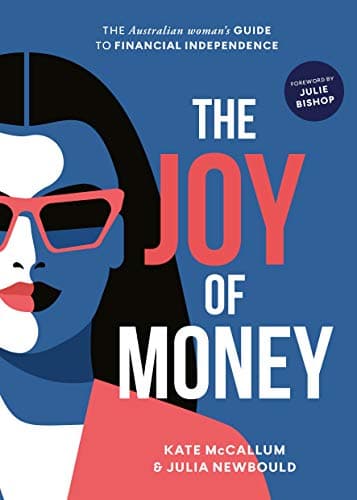
The Joy of Money
Kate McCallum and Julia Newbould map out financial independence for Australian women, from super and investing to insurance and estate planning. Practical, warm and refreshingly free of finance-bro energy.
The Millionaire Fastlane
MJ DeMarco
The Millionaire Fastlane
DeMarco torches the slow-and-steady retirement dream and argues for building wealth through business instead. Loud, opinionated, and genuinely motivating.
Some links above are affiliate links. If you buy through them, Snowball Invest may earn a small commission at no extra cost to you. We only recommend books we'd suggest anyway.
Sources
Was this article useful?
Put it to your own numbers
Every calculator runs entirely in your browser, with nothing stored. See what these numbers look like for your own situation.
Explore the calculators →General information only. This article is educational and does not constitute personal financial advice. It does not account for your circumstances. Consider your own situation and seek advice from a licensed adviser before acting. Read our full disclaimer.

Timothy Hirou Gaschereau
Founder of Snowball Invest, not a financial adviser.
I write about what I'm learning myself, because nobody ever taught us how to take control of our own money. It's a skill, not a mystery, and it's never too late to learn it. The best day to start was yesterday, the second best is today.
LinkedIn →Related articles

Key Person Insurance Australia: What It Is and Why Your Business Needs It
Key person insurance in Australia explained: who qualifies, how much cover you need, the tax rules, and how it differs from buy-sell insurance.

Startup ESOP in Australia: What Your Equity Is Actually Worth
Weighing a startup offer with equity in it? The start-up concession, dilution, vesting cliffs, and how to value the package without kidding yourself.

Sole Trader vs Company in Australia: Which Structure Is Right for You?
Sole trader or company? We break down the tax, liability, cost and admin differences so you can choose the right business structure in Australia.